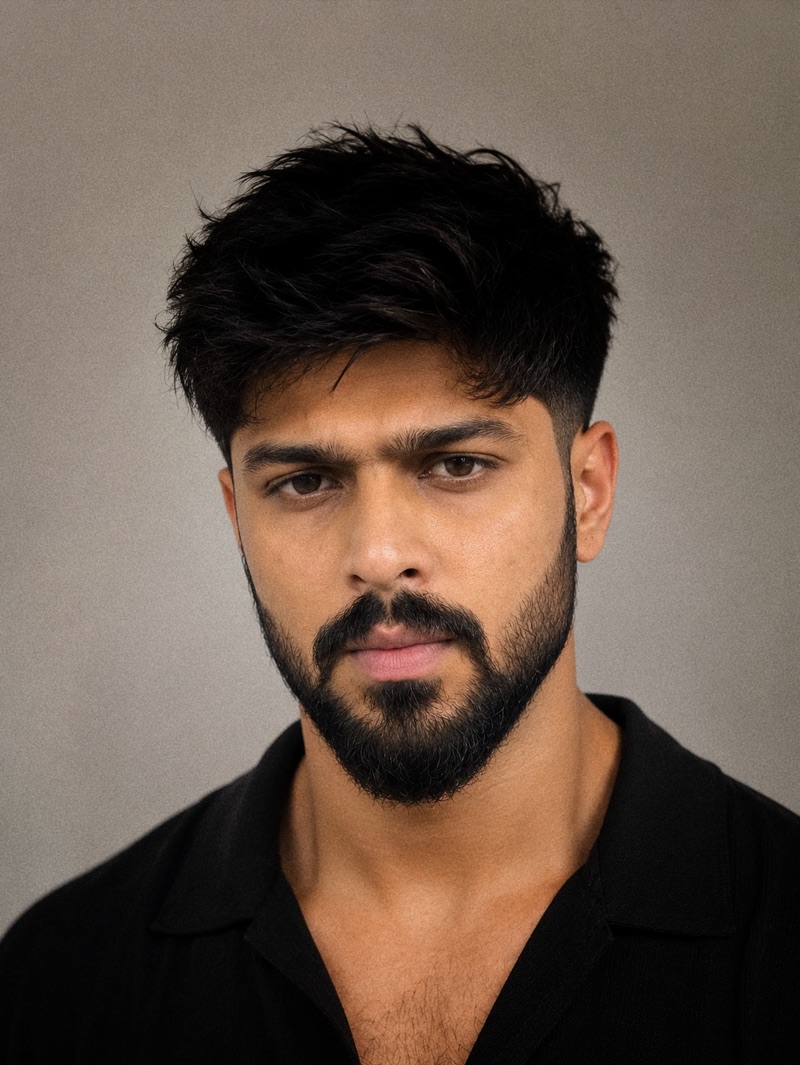
Founder · Builder → Bangalore
Satyajeet Deshmukh
Ray Now
Building the connective tissue of the physical world.
I've been building things for eleven years. Not in one direction, in every direction. Marketing, operations, product, company formation, company dissolution. D2C brands, fintech, AI tools, bots. I've been the person who figures out how things work and then makes them work for someone else. I've done that enough times that I've stopped calling it range and started calling it what it actually is: a compulsion to understand things end to end.
The Final Leap is where that compulsion has landed.
The engineering barrier felt real. The distance between where I was and where those industries lived felt real. But something has shifted. The tools exist now that didn't before. The information gaps are mappable in ways they weren't before. And eleven years of learning how organizations actually work, how supply chains fracture, how talent moves, how companies make sourcing decisions, turns out to be exactly the kind of knowledge the hardware economy is missing.
That's not a coincidence I'm going to ignore.
The supply chain for humanoid robotics is opaque. The equivalent map for space hardware doesn't exist at all. The talent that will build both is scattered and unmapped. Nobody has built the infrastructure layer that holds all of this together.
That's what we're building. Three atlases, for robotics supply chains, space hardware, and hardware engineering talent, that together form an intelligence layer no single company, investor, or recruiter can currently access. We call the talent side The Forge.
The long arc bends toward one destination: building India into a meaningful node in the global supply chain for robotics and space hardware. The work begins now.
I dropped out of a computer science engineering program in my second year. I don't think about that as a detour. I think about it as the moment I started learning the way I actually learn: by doing, by building, by getting things wrong in ways that cost something.
The Final Leap started forming as a thesis almost five years ago. It began as something else: an AI marketing company, then a tool for automated video production. But the world was moving faster than any single product could keep up with. So I did what I always do: I went upstream. Asked the bigger question. Where is all of this actually going?
The answer kept pointing to the same place. The physical world. Robotics. Space. The supply chains that will feed the machines that build the future. And the gap, the dangerous, widening gap, between how fast that hardware world is moving and how little infrastructure exists to support it.
Nobody has built the map. That's what we're building.
I write on Substack: energy grids, world order, game theory, robotics, the shape of what's coming. The same questions that drive The Final Leap, written out loud.
Read on Substack → ↗